In international trade and industrial equipment exports, different countries have varying electrical standards. Therefore, confirming the voltage specifications of a machine is crucial. If the voltage does not match the local standard, the machine may not function properly, or worse, it could be damaged or pose safety risks.
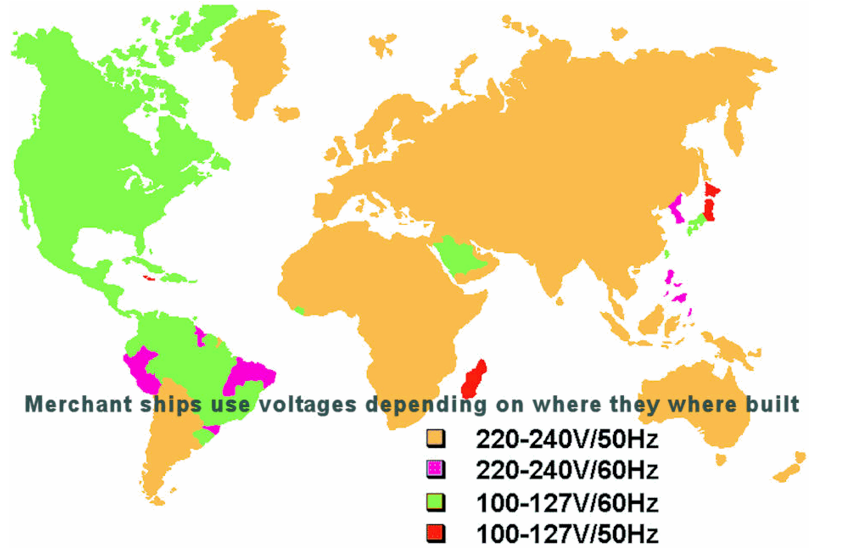
Different Voltage Standards Around the World
Voltage and frequency vary significantly across countries. For example:
- Europe: Most countries use 220-240V, 50Hz
- North America (USA, Canada): The standard is 110-120V, 60Hz
- Japan: Uses 100V, 50/60Hz
- Brazil, India, South Africa, etc.: Some regions have both 110V and 220V, requiring specific confirmation
Why Is Voltage Confirmation Important?
- Ensures Proper Operation – If the voltage does not match the local standard, the machine may fail to start or function abnormally.
- Prevents Equipment Damage – Incorrect voltage can burn out motors, circuit boards, or other electrical components.
- Enhances Safety – Using the wrong voltage can lead to short circuits, overheating, or even fire hazards.
- Avoids Additional Costs – Discovering voltage mismatches after installation may require extra expenses for transformers or machine modifications, leading to unnecessary delays and financial losses.
How to Confirm the Correct Voltage?
- Before placing an order, provide the local voltage, frequency (Hz), phase (single-phase/three-phase), and wiring configuration.
- If unsure, consult a local electrician or power company to obtain accurate information.
- Clearly communicate voltage requirements with the supplier to ensure the machine is customized accordingly.
Conclusion
Confirming the machine’s voltage is essential to ensure proper functionality and safety. Since voltage standards vary across countries, early communication and verification can help avoid equipment damage, safety risks, and additional costs, ensuring smooth production and operation.
